








Principles
Shorelands are naturally full of a rich diversity of life: plants, animals, and microorganisms, including humans. As we understand more about the structure and function of shoreland, we also become aware of the importance of our role in keeping these systems healthy. Our efforts can lead to the restoration of a quality outdoor resource, and a community full of life and beauty. betewinw.com
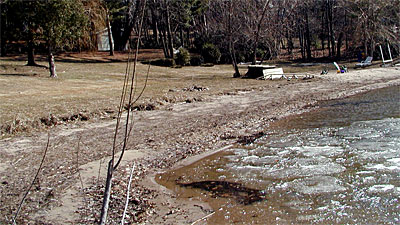
Shoreline erosion is evident on this lakeshore lot.
The problem
Traditional lawns, while not particularly harmful, have few of the benefits of a more natural shoreline. Lawns are shallow rooted, provide little wildlife habitat, need frequent maintenance and are often over-fertilized. These factors can lead to problems on your lake such as:
- Shoreline
erosion and lake sedimentation - Algal
blooms and excessive aquatic plant growth - Loss
of wildlife habitat, but an increase in nuisance animals - Loss
of leisure time
The buffer zone solution
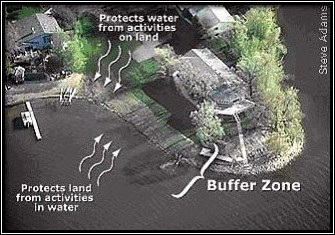
Creation of a buffer zone is the essence of the lakescaping concept. It is an opportunity to balance our needs and priorities with the needs and priorities of those with whom we share life at the edge of the water.
Lakescaping and shoreland restoration can return many desirable features to your shoreline:
- Provide
habitat for a wide variety of wildlife - Filter
out pollutants and runoff that degrade water quality - Prevent
shoreline erosion by absorbing wave action - Enjoy
abundant nature: flowers, shrubs, trees, aquatic plants, fish, insects,
birds - More
leisure time to relax and enjoy the nature of life at the lakeshore
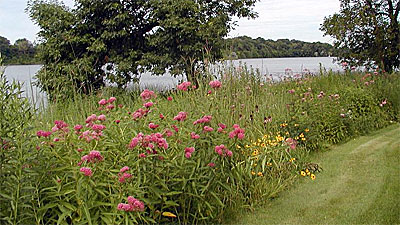
The restoration of a buffer zone using native plants.
Restoring the balance of nature enhances the aesthetic quality and recreational opportunities we appreciate. It will also balance your lifestyle with the needs of the natural communities of plants and animals that also call the shoreland home.
To learn more about lakescaping and shoreland restoration check out these resources: